
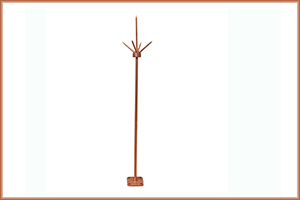
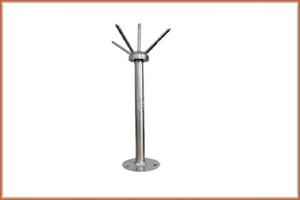
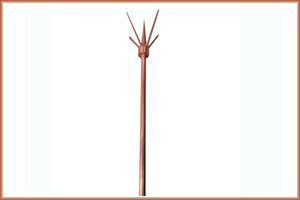
Copper Lightning Arrester vs. Copper Bonded Lightning Arrester: Which One Is Best for India?
With heavy monsoon thunderstorms and frequent lightning strikes across India, installing an efficient lightning protection system (LPS) is essential for residential, commercial, and industrial structures. However, during selection, engineers and property owners often face a common dilemma: Pure Copper Lightning Arrester vs. Copper Bonded Lightning Arrester.
Which option delivers the best balance between performance, durability, and cost? This comprehensive guide breaks down their differences, benefits, standards, and ideal application scenarios.
Quick Comparison: Pure Copper vs. Copper Bonded Arrester
| Parameter | Pure Copper Lightning Arrester | Copper Bonded Lightning Arrester |
|---|---|---|
| Material Composition | 99.9% Solid Pure Copper | High-Tensile Low Carbon Steel + Copper Coating |
| Copper Layer Thickness | Solid throughout | Standard 100 to 254 microns |
| Electrical Conductivity | Highest (~100% IACS) | High (~30 to 40% IACS equivalent for high-frequency surge) |
| Tensile Strength | Moderate (prone to bending at high elevations) | Very High (steel core provides structural rigidity) |
| Corrosion Resistance | Superior in all conditions | Excellent (when coating thickness is ≥ 250 microns) |
| Lifespan | 25 to 30+ Years | 15 to 25 Years |
| Cost Efficiency | High investment (Expensive) | Cost-Effective (30% to 50% cheaper) |
| Theft Risk | High (due to high copper scrap value) | Low (virtually no scrap resale value) |

What Is a Pure Copper Lightning Arrester?
A Pure Copper Lightning Arrester is manufactured using 99.9% solid electrolytic copper (C11000 grade). It offers maximum electrical conductivity, allowing sudden high-current lightning discharges to pass directly into the grounding network with minimal electrical resistance.
Advantages:
- Maximum Electrical Conductivity: Rapidly dissipates high-ampere lightning surges safely.
- Exceptional Chemical Resistance: Impervious to harsh chemical environments, high salinity, and coastal atmosphere.
- Long Shelf Life: Operates reliably for decades with negligible maintenance.
Disadvantages:
- High Initial Investment: Pure copper raw material prices make it an expensive choice.
- High Theft Risk: Rooftop copper installations are frequent targets for scrap theft.
- Mechanical Softness: Copper is a relatively soft metal and can bend under extreme wind loads at higher elevations.
What Is a Copper Bonded Lightning Arrester?
A Copper Bonded Lightning Arrester features a high-tensile, low-carbon steel core rod bonded with a uniform layer of copper (typically 100 to 254 microns) using an electro-plating process.
Due to the "Skin Effect" phenomenon during lightning strikes, high-frequency surge currents travel predominantly on the outer surface of a conductor. The copper-plated outer skin handles the electrical surge discharge, while the high-tensile steel core delivers structural strength.
Advantages:
- Cost-Effective: Typically 30% to 50% cheaper than solid copper units.
- Superior Structural Rigidity: High tensile strength prevents the rod from bending in strong winds or atmospheric pressures.
- Low Theft Risk: Low scrap value deters unauthorized removal or vandalism.
- Reliable Corrosion Protection: A 254-micron copper layer prevents core degradation and rusting over long exposure periods.
Disadvantages:
- Coating Damage Risk: Deep scratches or mechanical gouges during installation can expose the inner steel core to localized rusting.
Indian Standards & Regulatory Compliance (IS/IEC 62305 & NBC 2016)
When designing a Lightning Protection System (LPS) in India, adherence to IS/IEC 62305 and the National Building Code (NBC 2016) guidelines is mandatory:
- Coating Standard: For copper bonded conductors, international and Indian standards specify a minimum copper coating thickness of 254 microns (10 mils) to guarantee compliance with UL 467 / IEC standards.
- Protection Zone Calculation: The protection coverage radius for Conventional Spike Arresters or Early Streamer Emission (ESE) arresters must be calculated based on structure height and site risk classification.
- Earthing System Integration: The lightning arrester must connect smoothly to dedicated Chemical Earthing or Copper-Bonded Grounding Electrodes via adequate copper/GI tape down-conductors.
Final Verdict: Which One Should You Choose?
Choose Copper Bonded Lightning Arresters If:
- You are managing commercial buildings, residential complexes, warehouses, or solar power plants where budget optimization matters.
- The installation area has a high risk of material theft or vandalism.
- High elevation requires structural rigidity to withstand strong wind forces.
Choose Pure Copper Lightning Arresters If:
- The project site is located in highly corrosive environments like chemical processing plants, fertilizer factories, or coastal marine zones.
- Maximum longevity and top-tier conductivity are paramount, and budget limits are flexible.
Frequently Asked Questions (FAQs)
No. Provided the copper coating meets the standard 254-micron specification and is installed without deep surface scratches, a copper bonded arrester easily lasts 20 to 25 years without degradation.
According to IS/IEC and UL guidelines, a minimum coating thickness of 254 microns (10 mils) is required for optimal performance and corrosion resistance.
A conventional spike arrester protects a localized zone defined by a cone angle, whereas an Early Streamer Emission (ESE) arrester emits ionization pulses in advance, extending protection over a much wider radius (up to 107 meters from a single rod).